Jose Mier has spent plenty of time exploring Sun Valley, California, and I’ve learned that understanding a neighborhood means looking beyond its storefronts and busy commercial streets. One nearby feature that tells an important story about how the San Fernando Valley has grown is the Tujunga Wash Greenway: a project that brings flood protection, habitat, walking paths, and water conservation into the same urban landscape.
Why an Urban Wash Matters
In Southern California, the word “wash” can sound like a dry ditch for most of the year. But these waterways are part of a larger natural system that moves stormwater from the mountains through the Valley toward the Los Angeles River. The Tujunga Wash watershed drains a broad area, and the channel is an important piece of regional flood-control infrastructure. During heavy rain, moving water safely through developed neighborhoods is a serious public-safety responsibility.
Much of the wash was channelized in the mid-twentieth century to carry storm runoff more efficiently. Concrete channels may look stark, but their role is practical: they help manage flows in a region that can experience intense winter storms after long dry periods. The challenge is finding ways for this infrastructure to do more than one job.
From Flood Channel to Greenway
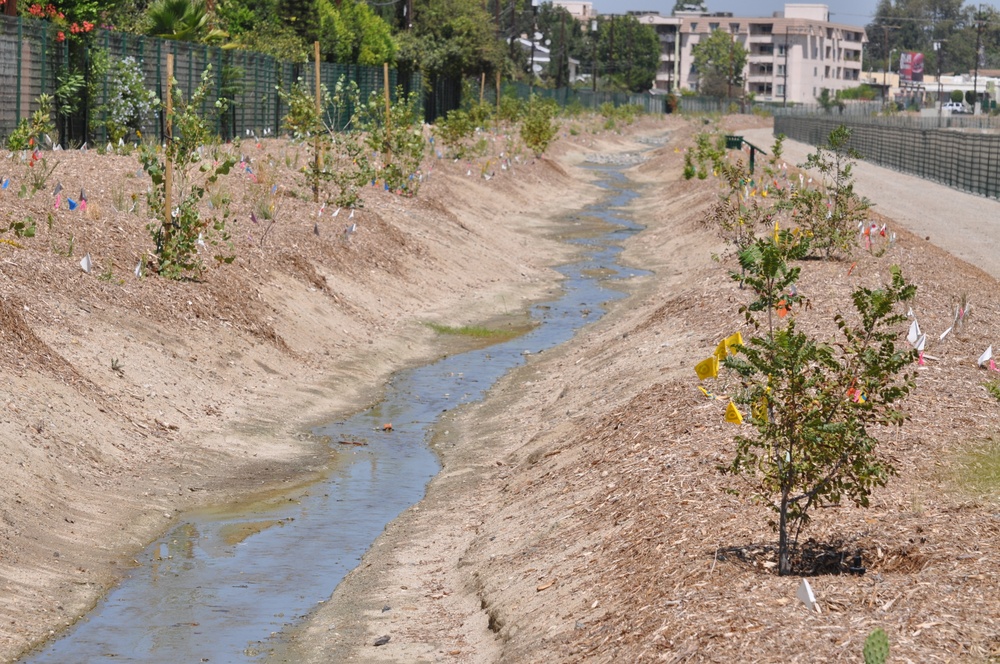
The Tujunga Wash Greenway and Stream Restoration Project shows how that challenge can be approached. Along a section of the engineered channel in the San Fernando Valley, a naturalized stream course, native planting, and public pathways create a greener corridor alongside the flood-control system. The project was developed through collaboration among public agencies and conservation partners, demonstrating that water infrastructure and public open space do not always have to be separate ideas.
According to the U.S. Army Corps of Engineers, the restoration project opened to the public in 2012 and included native riparian vegetation and pedestrian paths. It linked with other greenway improvements to create a longer habitat corridor. I find that kind of practical cooperation encouraging: a piece of infrastructure built for safety can also become a place where people encounter nature close to home.
Helping Water Stay in the Valley
Water conservation is another important part of the story. In a dry region that imports a substantial share of its water, capturing and replenishing local groundwater is worth attention. The greenway’s naturalized stream and planted areas help some water infiltrate rather than simply rushing through a hard-lined channel. Project summaries from landscape and county organizations describe groundwater recharge as one of the greenway’s major benefits.
It is important not to confuse a greenway with a replacement for flood-control infrastructure. The goal is to combine environmental features with the channel’s primary job, not to compromise its capacity to carry stormwater. That balance—safety first, with ecological improvements where feasible—is what makes this project interesting to me.
Native Plants and Urban Wildlife
Native plants are well suited to local conditions when they are selected and maintained properly. They can provide habitat for birds and other wildlife, add shade and seasonal interest, and often require less irrigation than thirsty ornamental landscaping once established. Along an urban waterway, plantings can also soften the visual impact of concrete and create a more welcoming experience for people using nearby paths.
These benefits may sound modest compared with a major park, but they add up. A green corridor can give residents a glimpse of a more natural landscape while helping connect isolated patches of habitat. It also offers a useful reminder that environmental improvements do not always require an untouched wilderness; sometimes they begin with a narrow strip of land beside an existing public works project.
A Place for Walking, Cycling, and Learning
Public paths make the greenway accessible to people who may not have time for a long drive to the mountains or the coast. Depending on the access point and route, visitors can use the area for a short walk, a bike ride, or a quiet break outdoors. Nearby stretches of the Tujunga Wash corridor also connect with the Valley’s broader network of paths and public spaces.
Before heading out, I recommend checking current access information and respecting posted signs. These paths sit alongside flood-control infrastructure, and the channel itself is not a place to enter. Conditions can change after storms, maintenance work, or construction, so a little planning makes a visit safer and more enjoyable.
What It Says About the San Fernando Valley
Sun Valley and its neighboring communities are often discussed in terms of roads, industry, housing, and commerce. Those are all important parts of local life, but the region’s waterways tell another story: how communities adapt to the climate, manage risk, and try to create healthier public spaces in a heavily built-up area.
Projects like the Tujunga Wash Greenway require coordination among agencies, planners, engineers, landscape designers, and residents. They also show that environmental restoration can have everyday value. Better habitat, opportunities to walk and ride, and improved local water management are not abstract goals; they are benefits that can make a neighborhood more livable.
Watch: Tujunga Wash Greenway
This video introduces the Tujunga Wash Greenway and its stream-restoration approach in the San Fernando Valley.
My Takeaway
As someone who cares about Sun Valley and the wider San Fernando Valley, I like discovering projects that solve practical problems while improving daily life. The Tujunga Wash Greenway does not erase the need for reliable flood control, but it shows how careful design can add nature, recreation, and water-conservation value alongside essential infrastructure. It is a useful example of the kind of thoughtful local improvement worth noticing—and worth supporting as our communities continue to grow.